
Kimi Antonelli: The Making of a Mercedes Future
Kimi Antonelli’s Formula One story is moving at the speed of the sport itself. A teenager from Bologna rose through the junior categories, skipped the usual Formula 3 step, and arrived at Mercedes with the attention of an entire generation already waiting for the next name.
His first chapters are about raw pace, but they are also about preparation: a family shaped by racing, a junior career built on titles, and the ability to keep learning when the expectations become louder. This is the story of how Andrea Kimi Antonelli reached the Formula One grid and began to make the Mercedes future feel immediate.
A racing family and an early instinct
Andrea Kimi Antonelli was born in Bologna, Italy, in 2006. His father, Marco Antonelli, is a sportscar racer and team owner, so racing was part of the family landscape long before Kimi had a place on the Formula One grid.
He started karting young and quickly built a reputation for speed and confidence. The important detail was not only that Antonelli won, but how naturally he seemed to find the limit. He could be aggressive without looking lost, and he carried the same instinct from one category to the next as the cars became faster and the margins became smaller.
That combination made him a clear prospect for Mercedes. He joined the Mercedes Junior Team in 2019, giving the German manufacturer a long view of a driver who was still developing but already showed unusual composure.
Titles came quickly
Antonelli’s move into single-seaters was just as rapid as his karting progress. In 2022 he won both the Italian Formula 4 and ADAC Formula 4 championships, turning a promising first season into a statement of intent.
The following year brought another step forward. Antonelli won the Formula Regional Middle East championship and the Formula Regional European championship, proving that his pace was not limited to one type of circuit or one weekend. He could qualify, manage races, and adapt to different cars while the pressure around his future continued to grow.
For many drivers, Formula 3 would have been the natural next step. Mercedes saw a different route. Rather than add another year to the ladder, the team backed Antonelli’s readiness for Formula 2 with Prema in 2024. It was a demanding decision, but it matched the sense that his career was not following a standard timeline.
Learning in Formula 2
Formula 2 was a significant change. The cars were heavier, the field was close, and the technical picture was more difficult to read. Antonelli’s first races were about collecting experience and points while he and Prema worked through a new generation of cars.
Then the results began to arrive. A breakthrough Sprint victory in the rain at Silverstone showed his confidence in difficult conditions. A maiden Feature Race win at the Hungaroring followed, and his wet-weather performance at Spa-Francorchamps became one of the season’s clearest demonstrations of courage and car control.
Those races mattered because they revealed more than speed. Antonelli could stay calm when the track became unpredictable, commit when a move required trust, and turn a difficult situation into an advantage. Mercedes did not need to imagine what he might become; the evidence was appearing in real time.
The Mercedes seat
When Lewis Hamilton announced his move to Ferrari for 2025, Mercedes had a seat to fill alongside George Russell. Antonelli became the centre of the conversation, and shortly after his eighteenth birthday the team confirmed that he would make his Formula One debut with the Silver Arrows.
It was a huge responsibility. Mercedes was not simply giving a young driver a chance; it was asking him to step into one of the most visible seats in the sport after a seven-time World Champion. Antonelli’s challenge was therefore about more than lap time. He had to learn the rhythms of a Grand Prix weekend, manage the detail of a modern F1 car, and develop in public while the comparisons kept coming.
His rookie season showed both the promise and the reality of that transition. There were difficult weekends, moments where the car and the circuit exposed his inexperience, and races where the result did not tell the full story of his progress. There were also three podiums and 150 points — a strong foundation for a driver still learning the highest level of racing.
The feeling of a new era
Antonelli’s appeal comes from the contrast between responsibility and freshness. The Mercedes black and teal livery carries decades of engineering, championships, and expectation. Behind the visor is a driver who is still forming his habits, his references, and his relationship with the Formula One calendar.
That tension gives the artwork its energy. A Kimi Antonelli Mercedes Formula 1 poster is not only a record of a race weekend. It captures the feeling of a new name entering an established visual world: the Petronas colors, the number 12, the halo, and the sense that the next chapter is already underway.
For fans, a Mercedes future star print carries a similar tension. It is about potential, but not empty potential. Antonelli has already done the difficult work of winning titles, adapting to faster cars, and performing when the track is wet and the margin for error disappears.
Italy, Mercedes, and the road ahead
Antonelli’s Italian identity is part of the story without being the whole story. He brings the emotion and detail of a country with a deep racing culture, but he also represents a modern Mercedes pathway built on long-term development and trust.
The road ahead will ask for consistency. One fast lap can announce a driver, but a career is built across full seasons: tyre management, technical feedback, difficult travel, changing conditions, and the patience to improve after a weekend that did not go to plan.
That is why a Kimi Antonelli Japanese Grand Prix poster works as more than a souvenir. It marks a specific moment in a career that is still expanding, when every new circuit adds another layer to the story. The same is true of the King of Formula 1 design: it reflects the confidence fans already see in him, while leaving room for the results still to come.
A legacy still being written
Kimi Antonelli is not being asked to repeat someone else’s career. He is learning inside a team with a heavy history, but the shape of his own story is already visible: quick hands, a high tolerance for pressure, and the willingness to keep learning when the spotlight is uncomfortable.
His legacy will eventually be measured in wins, podiums, and championships. For now, it lives in the moments that made people pay attention — the rain at Silverstone, the commitment at Spa, the early Mercedes races, and the feeling that a driver from Bologna has opened the door to a new era.
The next chapter is not guaranteed. That is what makes it compelling. Antonelli’s career is still close enough to the beginning that every race can change the shape of the story.
Explore the Kimi Antonelli collection
The story continues in the artwork. Here are a few Kimi Antonelli designs available from Posteryze:
- Kimi Antonelli Mercedes Formula 1 Poster
- Kimi Antonelli Mercedes Future Star Poster
- Kimi Antonelli Japanese Grand Prix Poster
- Kimi Antonelli King of Formula 1 Poster
Browse all Kimi Antonelli posters
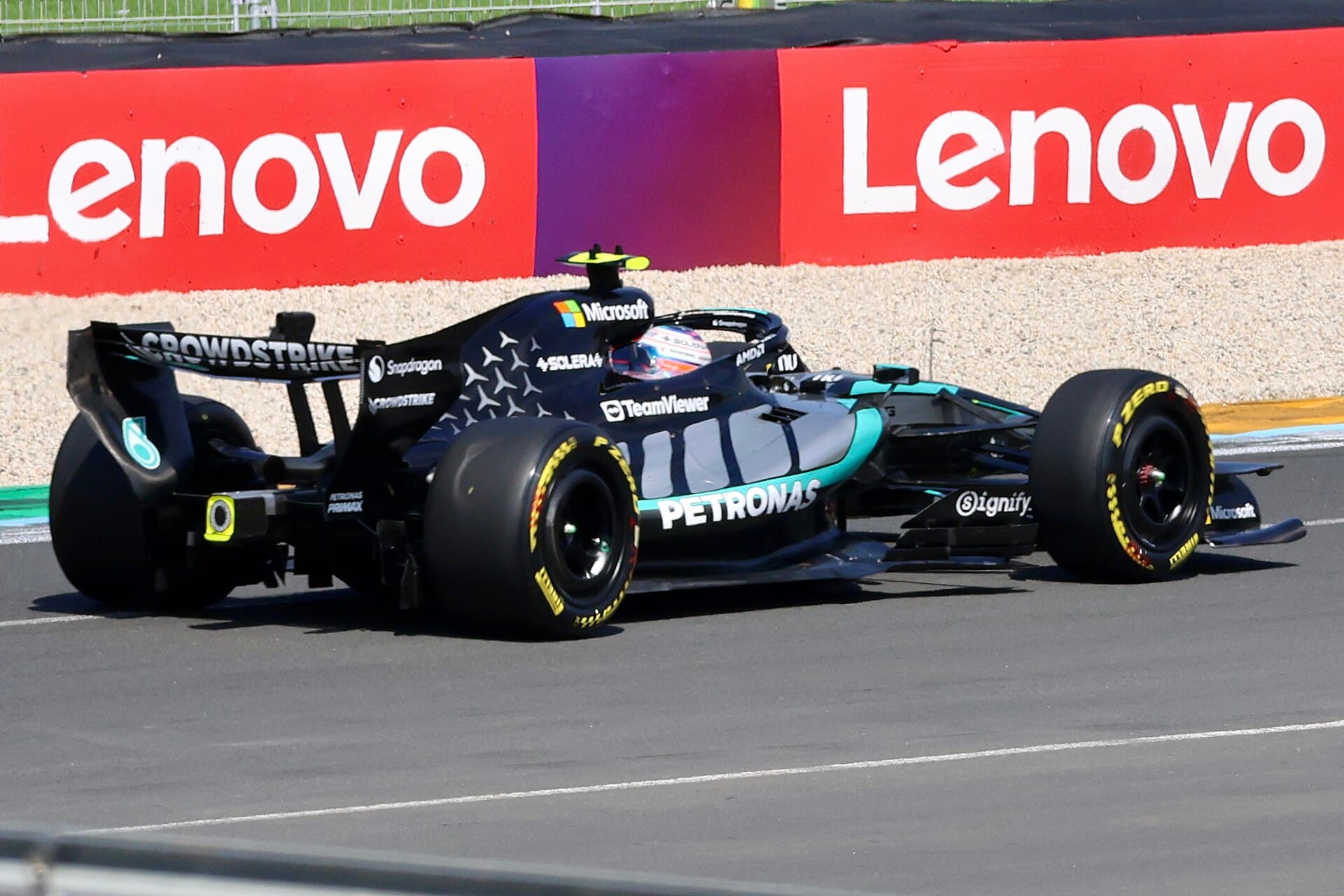
Hero image: Mercedes-AMG F1 W17 E Performance of Andrea Kimi Antonelli during free practice at the 2026 Australian Grand Prix. Photo by Yu Chu Chin, Wikimedia Commons, licensed under CC BY-SA 4.0.
This editorial story is an original summary based on Kimi Antonelli’s Wikipedia biography and the official Formula 1 driver profile.