
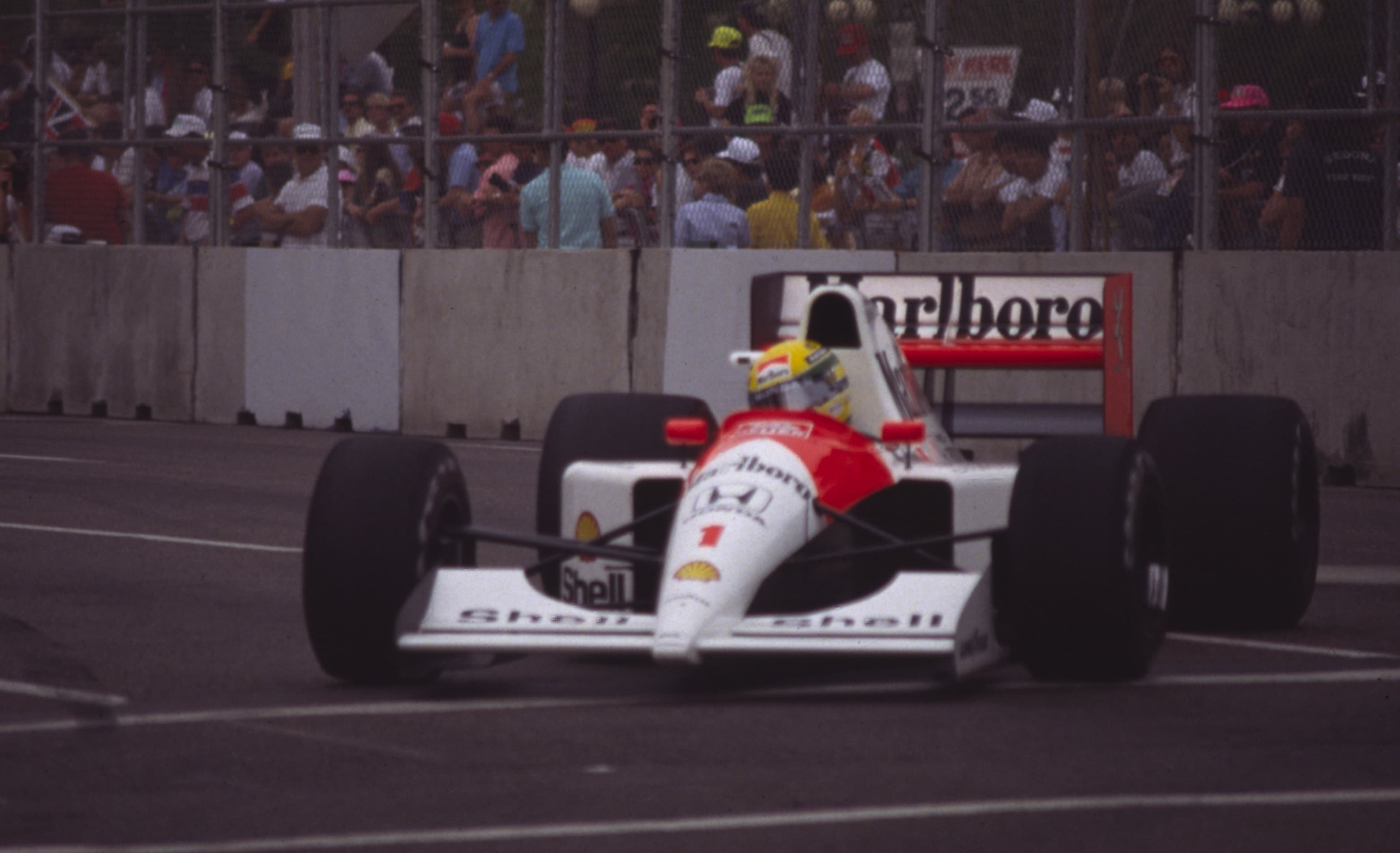
Ayrton Senna: Speed, Focus, and a Racing Legacy
Ayrton Senna remains one of Formula One’s most recognisable figures — not only because of what he won, but because of the way he drove. His career combined extraordinary speed with a rare ability to read a car, a circuit, and the changing conditions around him.
This is the story of how a boy from São Paulo became a three-time world champion, why rain became part of his legend, and why his name still carries meaning long after the chequered flag.
A driver shaped by São Paulo
Ayrton Senna da Silva was born on 21 March 1960 in São Paulo, Brazil. He began racing karts at 13, and his first kart was built by his father using a small lawnmower engine. The early years were already marked by commitment: Senna won the South American Kart Championship in 1977 and finished runner-up in the Karting World Championship in both 1979 and 1980.
In 1981 he moved to Europe to pursue single-seater racing. He won British and European Formula Ford titles, then took the 1983 British Formula Three Championship after a close battle with Martin Brundle. That same year, he won the inaugural Macau Formula Three Grand Prix. The results made his next step inevitable: Formula One.
From Toleman promise to Lotus speed
Senna made his Formula One debut with Toleman in 1984. His wet-weather drive at the Monaco Grand Prix, where he was closing rapidly on race leader Alain Prost before the race was stopped, announced a driver with unusual control and confidence in difficult conditions.
The move to Lotus in 1985 gave Senna a faster car and the opportunity to turn promise into victories. He took his first pole position and first Formula One win at the rain-affected Portuguese Grand Prix, then won again in Belgium. Across the following two seasons he added more victories and podiums, finishing third in the 1987 World Drivers’ Championship.
The McLaren years
In 1988 Senna joined McLaren, beginning the most successful chapter of his career. He won his first World Drivers’ Championship that season and went on to take further titles in 1990 and 1991. His rivalry with teammate Alain Prost became one of the defining stories of the era, combining two exceptional drivers, two contrasting styles, and a championship fight that demanded absolute concentration.
Senna finished his Formula One career with 41 Grand Prix victories, 65 pole positions, 80 podiums, and three world championships. Those numbers are impressive on their own, but they only describe part of the impression he made. Senna’s driving was direct, intense, and visibly committed — the kind of performance that made a qualifying lap feel like an event.
Why rain became part of his legend
Senna was widely acclaimed for his wet-weather performances, including races at Monaco in 1984, Portugal in 1985, and the 1993 European Grand Prix. He seemed to find additional clarity when grip disappeared and the normal margins of racing became smaller.
He was also known for giving engineers unusually precise feedback about car behaviour and track conditions, long before modern telemetry became standard. That combination of feel, technical understanding, and total concentration helped define the driver people remember today: fast enough to set the pace, analytical enough to explain why.
The final race and what remained
Senna moved to Williams for the 1994 season. On 1 May, while leading the San Marino Grand Prix at Imola, he was killed in a crash. His death shook Brazil and the wider racing world, and the safety reforms that followed changed Formula One permanently.
The legacy that remained was larger than a list of records. Senna became a national hero in Brazil and continues to be remembered for his raw speed, uncompromising style, wet-weather skill, and philanthropic work. His career was brief, but its visual and emotional language still feels immediate: the yellow helmet, the McLaren colours, the rain, and the insistence on finding the limit.
Explore the Senna collection
The story continues in the artwork. Here are a few of the Senna designs available from Posteryze:
Browse all Ayrton Senna posters
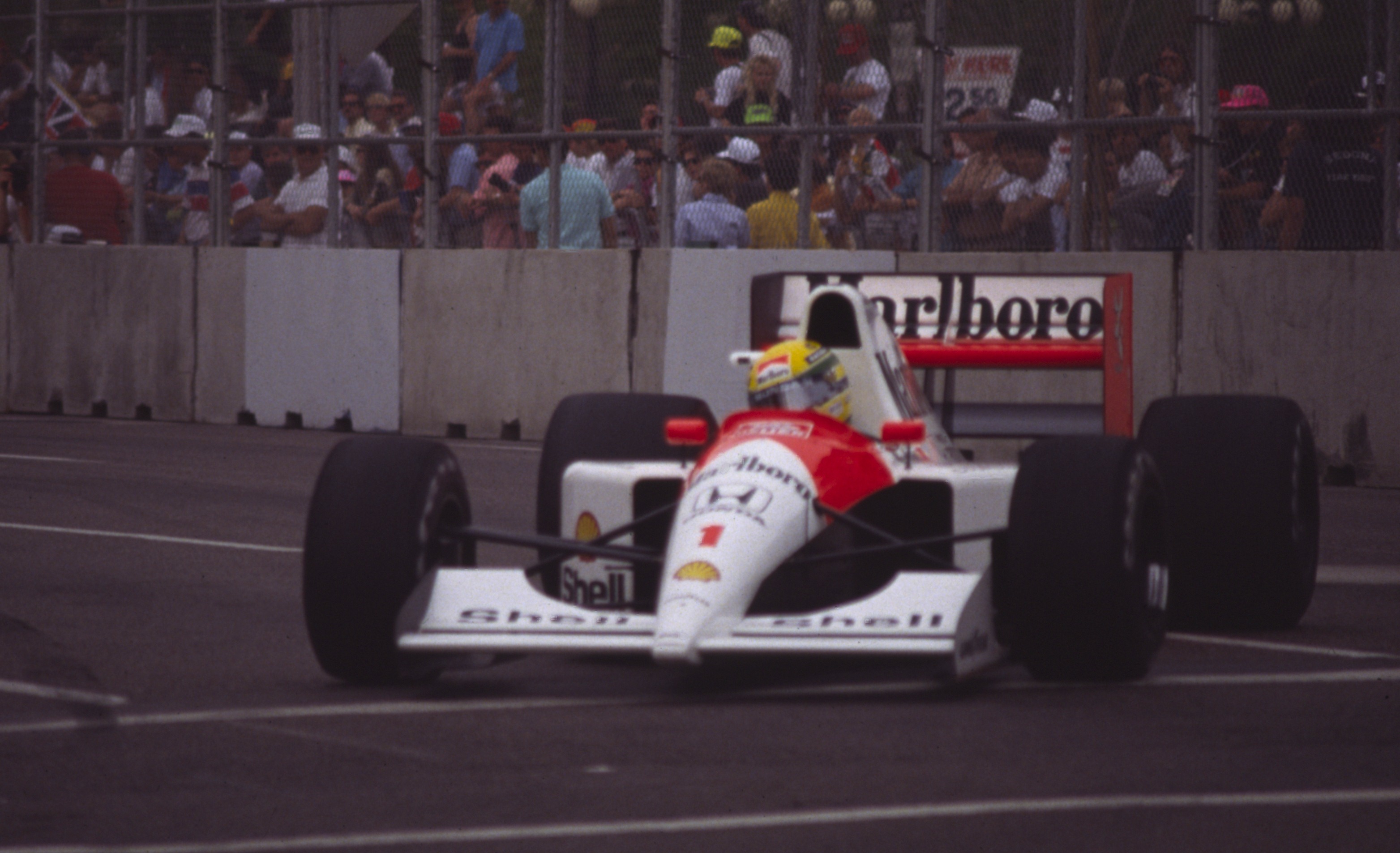
Hero image: Ayrton Senna driving for McLaren at the 1991 United States Grand Prix. Photo by Stuart Seeger, cropped derivative by Karpouzi, Wikimedia Commons, licensed under CC BY 2.0.
This editorial story is an original summary based on Ayrton Senna’s Wikipedia biography. The source covers his early life, junior career, Formula One seasons, racing record, legacy, and cultural impact.